News
The latest news from LTS!

Transitional President Search Moves into Stakeholder Consultation
- Details
St. Andrew's College and Lutheran Theological Seminary are entering the next stage of their search for a Transitional President, with two finalists now selected as the schools move toward appointing the leader who will help guide the establishment of a new theological school.
The finalists will soon meet with members of both schools and invited representatives from the wider church and theological education community. These conversations will give stakeholders an opportunity to hear directly from the candidates and provide feedback to the Search Committee.
The appointment of a Transitional President is an important step in the decision by the Boards of St. Andrew’s College (SAC) and Lutheran Theological Seminary (LTS) to establish a single institution while continuing their respective commitments to United Church and Lutheran theological education.
A broad search for leadership
The search began this summer with the development of a position description outlining the particular leadership skills and approach required for the transition. The position was publicly advertised in August, with applications accepted until September 20.
The search was promoted through theological, academic, professional and denominational networks in Canada and beyond, including the Association of Theological Schools, the American Academy of Religion and Society of Biblical Literature, University Affairs, HigherEdJobs and other national and regional channels.
The Search Committee sought a leader with experience in organizational change and complex institutional leadership, along with an understanding of theological education and an appreciation for the distinct traditions represented by the Evangelical Lutheran Church in Canada and The United Church of Canada.
The search attracted more than 15 applications from candidates in Canada and internationally, reflecting the reach of the recruitment effort beyond the schools' immediate networks. The committee reviewed the applications and narrowed the field through a process that included two rounds of interviews before selecting the final two candidates.
Finding the right leader for this transition requires more than identifying someone with experience in institutional administration. The successful candidate will need to understand the responsibilities that come with bringing two established theological schools into a single institution, while building relationships and maintaining confidence among the people and communities connected to each. These considerations have given the Search Committee a substantial task as it works toward a recommendation.
“I have seen the Search Committee members accept the tremendous responsibility of conducting this process on behalf of the communities of LTS and SAC with a deep sense of respect for the traditions within the STU and great hope for the future of multi-denominational theological education in Western Canada,” says Laureen Wray, a member of the Search Committee and Transition Team. “We have approached this process prayerfully, seeking God’s guidance in our questions, discussions, and discernment process. We are working to identify the candidate whom we believe is both deeply committed to and well equipped to strengthen our collective capacity to train Gospel-centered leaders for generations to come by guiding the establishment of the new school.”
Hearing from our communities
The next stage of the process will give invited stakeholders opportunities to engage directly with the finalists.
Each candidate will present their approach to the creation and establishment of the new school and will respond to questions. Students, faculty, staff, board members, alumni, donors, denominational representatives and other partners will be among those invited to participate. Following the presentations, participants will be able to provide feedback to the Search Committee through a survey.
The finalists will also meet in smaller settings with students, faculty, staff and Board members.
These conversations are intended to give the Search Committee a fuller picture of how each candidate would lead through a significant period of institutional change, while allowing members of the two schools’ communities to contribute their perspectives to the process.
Leadership for the transition
The Transitional President will serve in a time-limited role focused on establishing the new institution while maintaining continuity in the educational work, relationships and denominational commitments of both schools.
The role includes leadership in organizational integration, administration, accreditation, institutional culture and relationships with the churches and communities served by LTS and SAC.
Throughout the transition, the intention remains clear: the new institution will bring the resources of the two schools together while sustaining the distinctive theological formation and denominational relationships each has carried.
For Lutheran Theological Seminary, that includes a continuing commitment to Lutheran theological education and formation in Western Canada. For St. Andrew’s College, it includes its longstanding commitment to theological education and formation within The United Church of Canada.
What happens next
Following the stakeholder engagement process, the Search Committee will bring its recommendation to the Transition Team and the Boards of LTS and SAC for their consideration and decision.
The successful candidate is expected to begin in January 2027, with a planned appointment extending through July 2029.
LTS and SAC will continue to share updates as the search proceeds and the next stage of their shared future takes shape.

LTS and SAC Prepare for the Next Stage of Their Shared Future
- Details
Dear friends,
In June, we shared with you an important decision in the life of St. Andrew's and Lutheran Theological Seminary. It followed years of deepening partnership, conversation, and discernment about how our schools might best serve theological education into the future, building upon a relationship between our institutions that reaches back decades. The decision made this spring was therefore an important step in a much longer journey. As we now move into its next stage, we can say more clearly what that decision entails: LTS and SAC are becoming one institution.
Since then, the Transition Team has begun the considerable work of giving that decision institutional form.
SAC and LTS will shortly begin the search for a Transitional President. We anticipate they will begin serving in January 2027.
Working under the direction of the Transition Team and the authority delegated to it by both Boards, the Transitional President will provide day-to-day leadership in developing and implementing the governance, academic, administrative, and financial arrangements required for one institution.
While institutional structures are changing, the work of theological education continues. Current students will continue to be supported in their programs, and Lutheran and United Church education and formation will remain central throughout the transition.
As we grow together, we remain committed to ensuring that the distinctive theological traditions of both schools continue to flourish. One institution will bring our leadership and resources together while sustaining specifically Lutheran and United Church theological education. Lutheran and United Church programs, faculty, and courses will continue to provide formation rooted in their respective histories, theologies, practices, and denominational relationships, while creating new possibilities for learning together.
Students, alumni, donors, congregations, church leaders, denominational partners, and friends have shaped and sustained SAC and LTS through generations. This transition therefore touches more than institutional structure: these schools carry histories, relationships, traditions, and communities that matter deeply to those who have built them. As we change, and the world changes, we are consistently attentive to emerging questions about identity, belonging, and continuity. Much remains to be defined in how SAC and LTS carry their distinctive traditions and commitments forward into the new institution.
As this work continues, we remain committed to listening carefully to the communities that have formed and supported SAC and LTS. Your perspectives will help inform how we put this shared future into practice.
The Transition Team will seek a leader who understands the particular character of theological education, the denominational traditions represented by SAC and LTS, and the relationships upon which their shared future will depend.
The Transitional President position and accompanying materials will be made publicly available shortly. We want those who care about LTS and SAC to hear directly from us first. We are deeply thankful for your continued interest, encouragement, and support as we undertake this work together.
Rev. Dr. William H. Harrison
President, Lutheran Theological Seminary

Dea. Dr. Richard Manley-Tannis
Principal, St. Andrew's College


Lutheran Theological Seminary and St. Andrew's College Announce a New Chapter in Shared Ministry and Theological Education
- Details
Lutheran Theological Seminary and St. Andrew's College Announce a New Chapter in Shared Ministry and Theological Education
The Boards of St. Andrew's College (SAC) and Lutheran Theological Seminary (LTS) have affirmed their intention to move forward together into a new model of theological education and shared ministry.
This decision reflects years of collaboration, conversation, and discernment between the two institutions. As each school continues to be deeply rooted in their own denominational tradition, both share a longstanding commitment to theological education, leadership formation, academic excellence, and service to church and wider society.
The vision emerging from this work is grounded in the belief that theological education is strengthened when institutions work together in pursuit of a common mission. By building on existing relationships and shared ministries, LTS and SAC seek to create a vibrant and sustainable future for theological education across western and northern Canada.
“It gives me great joy to share that LTS is choosing to move into deeper union with our SAC partners,” said Rev. Dr. William H. Harrison, President of LTS. “The decision to grow into one is born of love between us and of belief that we have a common mission: serving God by fostering lay and ordained leadership in western and northern Canada, in our denominations and beyond.”
“It is with deep gratitude and conviction,” said Dea. Dr. Richard Manley-Tannis, Principal of St. Andrew’s College, “that I celebrate that the Board of Regents has decided to step into a new chapter of shared ministry and theological education with LTS. This decision is rooted in trust, discernment, and our longstanding partnership. This moment reflects our common calling to form leaders and serve the Church and world with courage, imagination, and hope for generations to come.”
In the months ahead, work will continue on refining governance structures, academic planning, and organizational arrangements. As this work progresses, both institutions remain committed to open communication with students, faculty, staff, alumni, donors, church partners, and other stakeholders.
The College of Emmanuel & St. Chad continues its own discernment process and remains a partner within the Saskatoon Theological Union. We are grateful for our longstanding relationship and look forward to continued conversations in the weeks ahead.
Throughout this work, the focus remains unchanged: preparing leaders for ministry, supporting churches and communities, and strengthening theological education for generations to come.

Saskatoon Theological Union Board Update
- Details
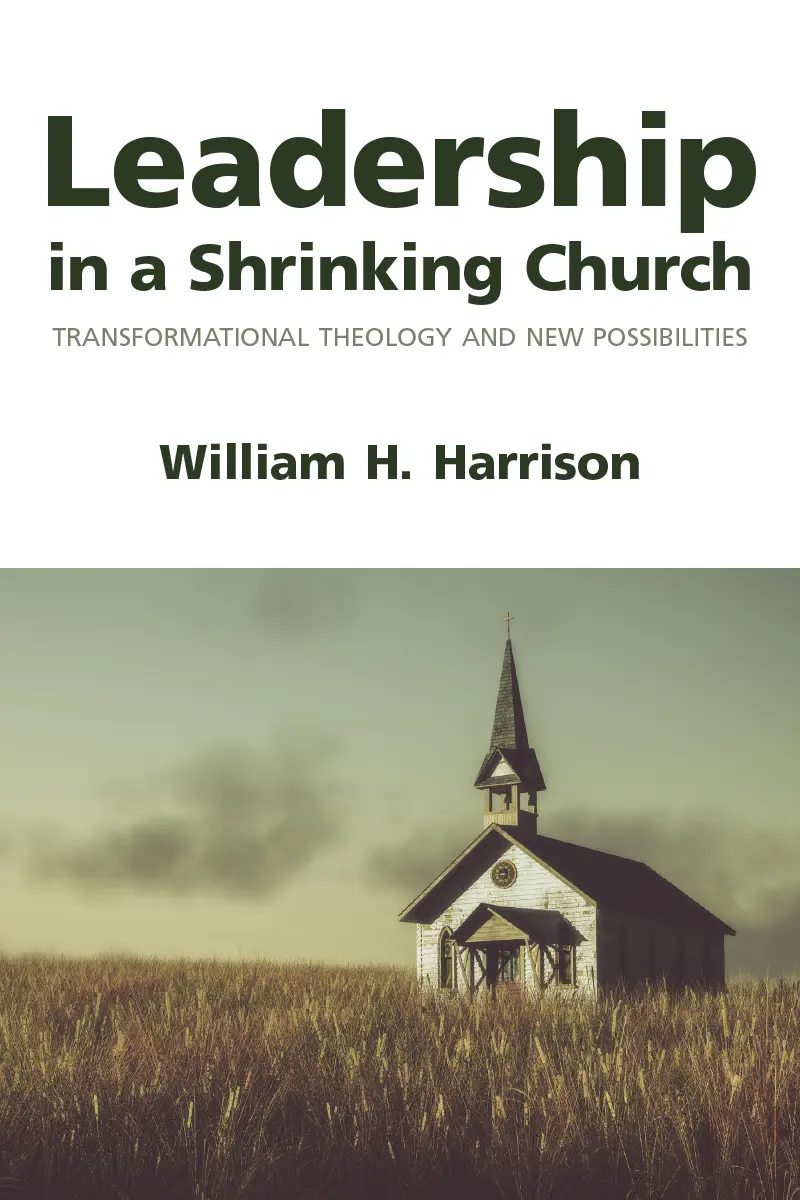
Reimagining Leadership in a Shrinking Church
- Details
Exploring new vision and practical renewal through a workshop tour.
Across Canada, churches of every tradition are facing a changing reality: smaller congregations, fewer resources, and an urgent need for renewed imagination. In response, Rev. Dr. William H. Harrison, President of Lutheran Theological Seminary, Saskatoon, is offering a timely resource for reflection and renewal through his new book, Leadership in a Shrinking Church: Finding New Vision in Unlikely Places.
In this compelling work, Harrison explores one of the most urgent realities facing Christian communities today: the decline in church membership and institutional strength. Yet rather than treating this as a crisis to be fixed, he invites leaders to discern how God might be at work precisely within that shrinking space. What if the Church’s renewal lies not in expansion, but in faithfulness, focus, and transformation?
Rather than treating decline as a crisis, Harrison invites leaders to explore how God’s transforming work continues to unfold—often within smaller, humbler, and more faithful communities.
From lecture to workshop: engaging the real work of leadership
Following well-attended sessions in Saskatoon, Regina, and Winnipeg, Harrison’s next workshop will take place in Kelowna in December, with additional events planned in Alberta and British Columbia in 2026.
Each gathering is designed not as a lecture but as a guided workshop—a chance for clergy, lay leaders, and congregational members to engage with the book’s ideas in practical, context-specific ways. Participants are invited to reflect on their own ministries, identify their core mission, and explore how to focus on what truly matters in this season of change.
“Leadership in a shrinking church,” Harrison writes, “means learning to see God’s transformation in places we never expected—and to trust that smaller does not mean lesser.”
Shared purpose, shared vision
As president of one of the schools within the Saskatoon Theological Union, Harrison brings a deeply ecumenical perspective to the conversation. Drawing on years of experience in theology, ethics, and pastoral leadership, he offers both academic insight and practical tools for discernment.
His workshops are meant to help communities move from anxiety about growth to renewed clarity about calling—inviting all who attend to consider how their faith can remain vibrant, even in a changing landscape.
Join the conversation
If you are a member, lay leader, or pastor of a congregation seeking fresh perspective for ministry, consider joining one of President Harrison’s upcoming workshop evenings. Together, participants are discovering that decline need not mean despair, and that the gospel continues to inspire transformation in the most unlikely places.
Purchase the book:
https://www.amazon.ca/Leadership-Shrinking-Church-Finding-Unlikely/dp/1640657177